Water is showing on a ceiling
Think about the weather and check the loft for fresh damp if there is safe access.
Roof leaks are not always where they first appear. Water can get under a slate, around a chimney or behind a roof edge, then travel some distance before showing up on the ceiling below. Blackpool homes also take a fair amount of wind-driven rain, so a roof that stays dry in ordinary rain may leak when the weather comes from the wrong direction.
Quote requests are provided by MyJobQuote, an independent third-party service.
Think about the weather and check the loft for fresh damp if there is safe access.
If only one slate or tile has moved, the fault may be local. If several have shifted, the old fixings may be starting to fail.
The lead flashing, the mortar joints and the chimney stack itself all need to be looked at.
Watch the water during rain and follow it towards the outlet.
Start by checking the edges, the outlet and the place where the flat roof meets the wall.
If the leak only appears when the wind blows from one direction, mention that. It can help show which side of the roof is taking the rain.
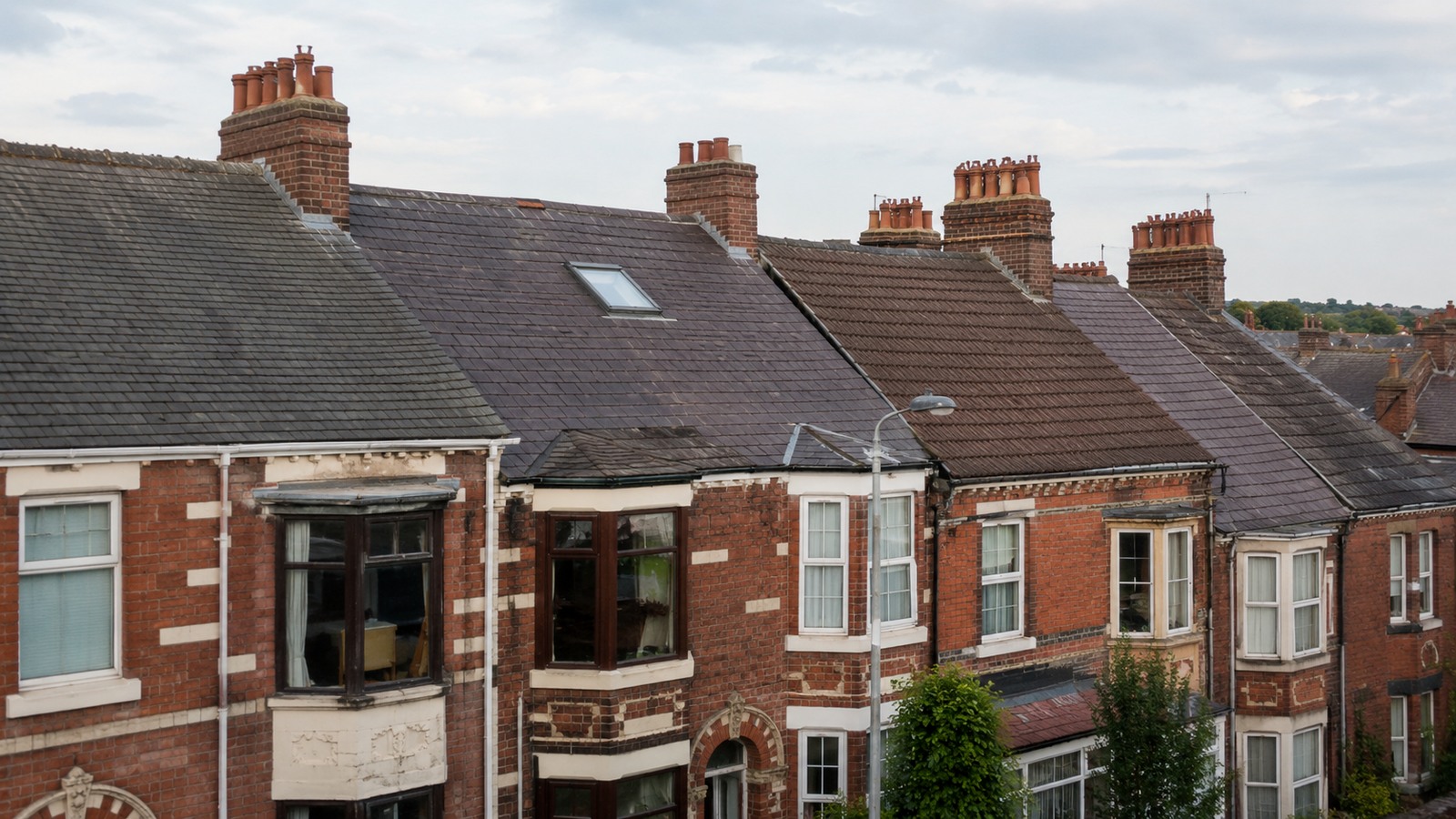
Blackpool Council's Foxhall guidance describes dense terraced streets where brick and slate are a strong part of the character. The council's town-centre conservation guidance also records that many older roofs were originally laid in Welsh slate and that a good number still retain it.
On older Blackpool terraces, a slipped Welsh slate can sometimes be re-fixed rather than replaced. Bay roofs and chimney flashings need a different approach because small splits or failed joints can let water travel into front rooms even when the main roof slope is sound.
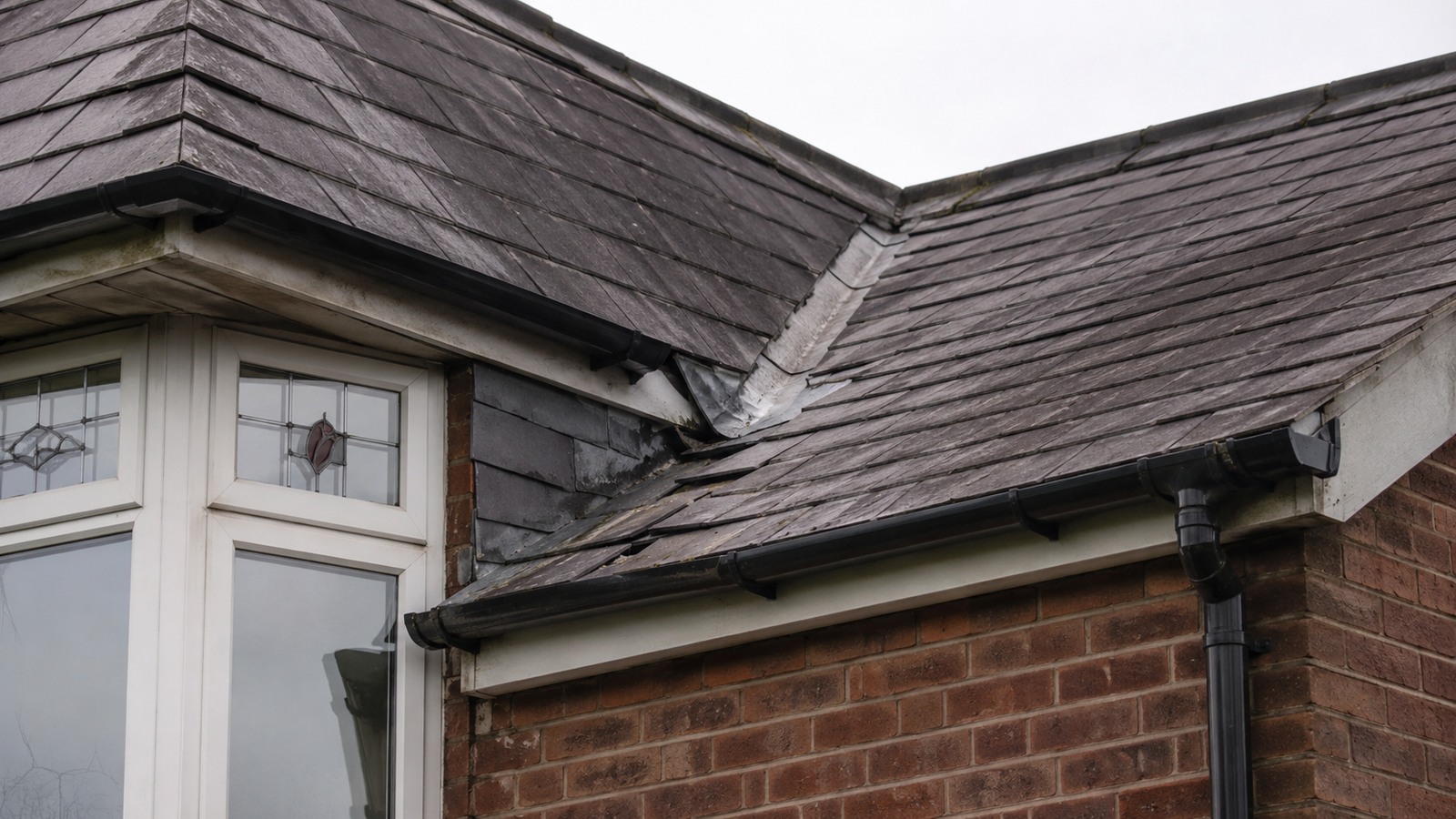
On exposed roofs, metal fixings and roof edges can wear more quickly than they do in sheltered areas.
Older brick-and-slate terraces often have bay windows, several chimney stacks and long roof slopes running across more than one house.
Many older buildings still have Welsh slate roofs and traditional details around chimneys, gutters and roof edges.
A cheap slate or tile can still lead to an expensive repair if the roof is difficult to reach.
Look for fresh damp in the loft, areas that have been patched several times and roof parts that would be difficult to reach for repairs.
A few checks from the ground and, where there is safe access, from the loft can show whether anything has moved or started leaking.